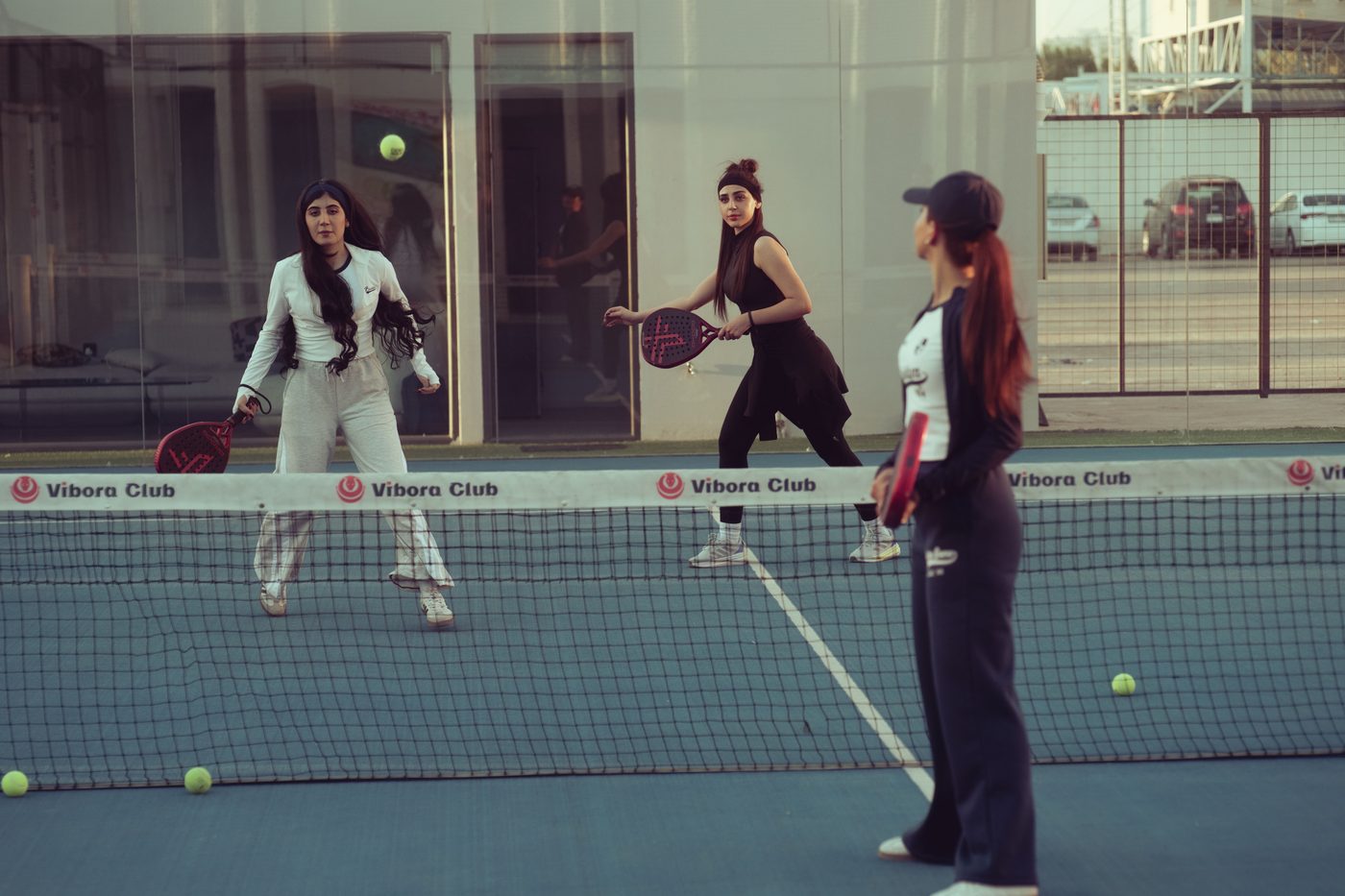
 GlassCourts
It's the most common question at every new padel club in North America, where pickleball arrived first. The short answer: pickleball is played on an open court with a plastic ball; padel is played inside glass walls with a pressurised ball and the walls are part of the rally. They share a friendly, doubles-first culture — and 39% of US padel facilities also offer pickleball, so many players do both.
| Padel | Pickleball | |
|---|---|---|
| Court | 20 × 10 m, enclosed in glass + mesh | 13.4 × 6.1 m, open, with a non-volley "kitchen" zone |
| Walls | In play after the bounce — the signature of the sport | None |
| Racket | Solid foam-core paddle, perforated, ~36 cm, wrist strap | Solid flat paddle, smaller and lighter |
| Ball | Pressurised, like a slightly softer tennis ball | Perforated plastic (wiffle-style) |
| Serve | Underhand, below waist, diagonal box | Underhand, diagonal, no bounce required before return on serve ("two-bounce rule" applies) |
| Scoring | Tennis scoring (15-30-40, sets) | Rally or side-out scoring to 11 |
| Format | Almost always doubles | Singles and doubles |
| Learning curve | Rallies from day one; tactics deepen for years | Rallies from day one; famous for quick social games |
Which should you try?
If you like tennis or squash, padel will feel like a homecoming with training wheels. If you want the lowest-cost, everywhere-available game, pickleball has a head start in most Canadian towns. Honestly? Try both — your local padel club probably has a pickleball night, and your pickleball friends are one glass wall away from converting.